If you've been training consistently for 6–12 months and you're ready to step up your frequency and volume, the Push Pull Legs split is probably the most battle-tested, widely-used intermediate programme structure in existence. Reddit's r/fitness has recommended it for years. Coaches worldwide programme variations of it for their intermediate athletes. And the research on training frequency and muscle protein synthesis explains exactly why it works so well, a conclusion consistent with CDC Physical Activity.
This guide covers everything: what PPL is, who it's for, how it compares to other splits, and a complete 6-day programme you can start this week, all grounded in research from WHO Physical Activity.
What the PPL Split Is
Push Pull Legs divides your training into three types of days based on the primary movement pattern:
- Push days train muscles that push: chest, shoulders, and triceps. Primary movements include bench press, overhead press, and dips.
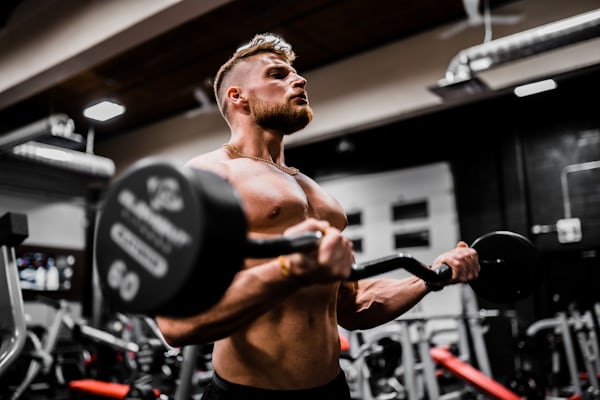
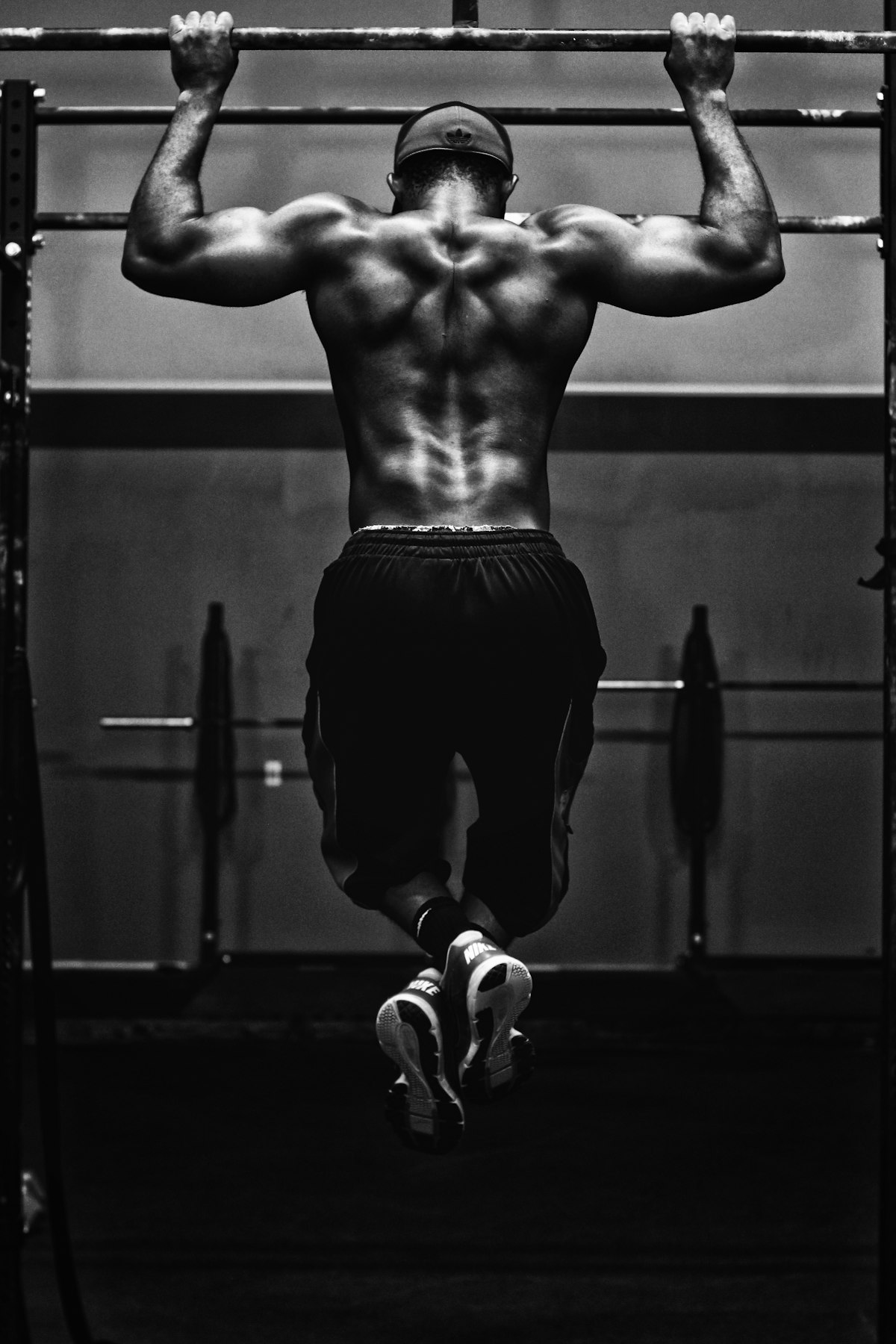
- Pull days train muscles that pull: back (lats, rhomboids, traps) and biceps. Primary movements include rows, pull-ups, and face pulls.
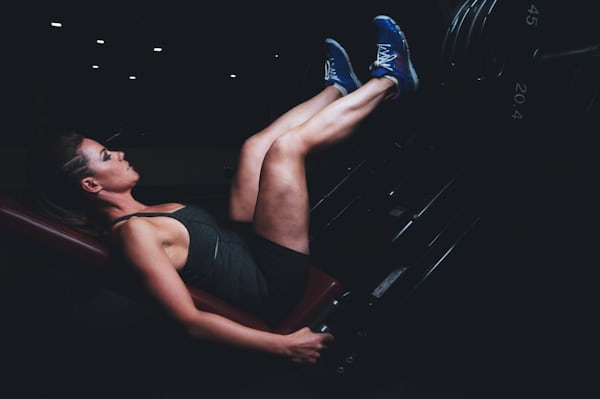
- Legs days train the entire lower body: quads, hamstrings, glutes, and calves. Primary movements include squats, Romanian deadlifts, and leg press.
In a 6-day week (Monday through Saturday, rest Sunday), you cycle through all three days twice — giving each muscle group two dedicated sessions per week. This twice-weekly training frequency aligns with what current hypertrophy research identifies as the optimal stimulus for intermediate muscle growth. According to NIH ODS, these principles are well-established
Who Should Use PPL
PPL is an intermediate-to-advanced programme. It is not appropriate for beginners, and this distinction matters a great deal. For more, see our guide on progressive overload
Beginners respond best to full-body programmes 3 days per week because their primary adaptation is neurological — learning to recruit motor units efficiently. They benefit from practising the squat, bench press, and deadlift three times per week at relatively low volumes. Splitting that volume across isolation-heavy PPL days at this stage is inefficient at best and counterproductive at worst.
PPL is right for you when: you've been training consistently for at least 8–12 months, your beginner linear progression has stalled, you can perform the main compound lifts with solid technique, and you can commit to 5–6 sessions per week with 60–75 minutes each. For more, see our guide on workout recovery
"The PPL split works because it gives each muscle group enough volume per session to drive growth, enough frequency per week to maintain elevated muscle protein synthesis, and enough recovery time between sessions to avoid cumulative fatigue. It's the sweet spot for intermediates." — Jeff Nippard, Natural Bodybuilder and Coach
PPL vs Upper/Lower vs Full Body
How does PPL compare to the other popular training splits? Here's a practical comparison:
- Full Body (3×/week): Best for beginners. Trains each muscle 3× per week at low volume per session. Excellent for skill development on compound lifts. Limited total volume per muscle group.
- Upper/Lower (4×/week): Excellent intermediate option. Trains each muscle 2× per week at moderate volume. More manageable schedule than PPL, slightly lower total weekly volume.
- PPL (6×/week): Best for intermediates committed to 5–6 sessions. Trains each muscle 2× per week at high volume. Maximum hypertrophy stimulus; requires high recovery capacity and consistent nutrition.
The myth that PPL is always superior to upper/lower for intermediates is worth busting: both produce comparable results when programmed with equivalent volumes. The right choice depends on your schedule and recovery capacity — not a universal hierarchy of splits.
The 6-Day PPL Program
Rest 2–3 minutes between compound sets, 60–90 seconds between isolation sets. Add weight when you can complete the top of the rep range across all sets with good form.
Day 1 — Push A (Chest Focus)
- Barbell Bench Press — 4 × 4–6
- Incline Dumbbell Press — 3 × 8–10
- Cable Fly or Pec Deck — 3 × 12–15
- Overhead Press (Seated Dumbbell) — 3 × 8–10
- Lateral Raise — 3 × 15–20
- Tricep Pushdown — 3 × 12–15
- Overhead Tricep Extension — 2 × 12–15
Day 2 — Pull A (Lat Focus)
- Pull-Up or Lat Pulldown — 4 × 6–8
- Barbell Row — 4 × 6–8
- Seated Cable Row — 3 × 10–12
- Face Pull — 3 × 15–20
- Dumbbell Curl — 3 × 10–12
- Hammer Curl — 2 × 12–15
Day 3 — Legs A (Quad Focus)
- Barbell Back Squat — 4 × 4–6
- Leg Press — 3 × 10–12
- Leg Extension — 3 × 12–15
- Romanian Deadlift — 3 × 8–10
- Leg Curl — 3 × 10–12
- Standing Calf Raise — 4 × 15–20
Day 4 — Push B (Shoulder Focus)
- Overhead Press (Barbell) — 4 × 4–6
- Incline Barbell Press — 3 × 8–10
- Cable Lateral Raise — 3 × 15–20
- Dumbbell Bench Press — 3 × 10–12
- Rear Delt Fly — 3 × 15–20
- Close-Grip Bench Press — 3 × 8–10
- Skull Crusher — 2 × 10–12
Day 5 — Pull B (Upper Back & Thickness Focus)
- Rack Pull or Conventional Deadlift — 3 × 4–6
- Chest-Supported Row — 4 × 8–10
- Single-Arm Dumbbell Row — 3 × 10–12
- Straight-Arm Pulldown — 3 × 12–15
- Incline Dumbbell Curl — 3 × 10–12
- Reverse Curl — 2 × 12–15
Day 6 — Legs B (Hamstring & Glute Focus)
- Romanian Deadlift — 4 × 6–8
- Bulgarian Split Squat — 3 × 8–10 per leg
- Leg Curl — 4 × 10–12
- Hack Squat — 3 × 10–12
- Walking Lunge — 3 × 12 steps
- Seated Calf Raise — 4 × 15–20
How to Progress on PPL Week Over Week
Use double progression on every exercise: work within the given rep range and add load when you can hit the top of the range across all sets. For example, if the target is 3 × 10–12 and you hit 3 × 12 with solid form, add 2.5kg (upper body) or 5kg (lower body) the following week and begin again at 3 × 10.
Expect to progress on compound lifts every 1–2 weeks and on isolation movements every 2–3 weeks at the intermediate level. Track every set in a log — this is not optional on PPL given the volume involved.
The 3 Most Common PPL Mistakes
1. Treating it like a beginner programme. PPL works because of its volume. If you're cutting exercises and doing 2-3 sets instead of the prescribed 3-4, you're doing a mediocre full-body programme with bad frequency. Commit to the volume or choose a different structure.
2. Starting PPL too early. Beginners who jump into PPL before establishing a strength base end up spreading their adaptation capacity thin across too many exercises. Spend your first year on a full-body programme with compound movements. PPL rewards you more when you have strength to build on.
3. Neglecting Legs B. The second leg session (hamstring/glute focus) is the most commonly skipped day in the programme. After 5 days of training, motivation wanes. But posterior chain development is critical for both aesthetics and injury prevention — commit to Legs B the same way you commit to Push A.
Nutrition for a 6-Day Training Week
Six days of training per week places significant demands on your recovery systems. Your nutrition needs to match that output.
- Calories: A slight surplus of 200–400 calories above maintenance is ideal for muscle building on PPL. Too deep a deficit and recovery suffers; too large a surplus and unnecessary fat gain follows.
- Protein: Target 2.0–2.4g per kilogram of bodyweight on a 6-day training week. The higher frequency means muscle protein synthesis is elevated more consistently — meet that demand with protein. For a 80kg individual, that's 160–192g daily.
- Carbohydrates: Your primary fuel source for 6 sessions per week. Don't restrict carbs on a high-volume programme. Rice, oats, sweet potato, fruit, and whole grains should feature prominently in your daily meals.
The Bottom Line
The Push Pull Legs split earns its reputation as the most popular intermediate programme through sheer results. It delivers twice-weekly training frequency for every muscle group, sufficient volume to drive continuous hypertrophy, and a logical structure that keeps related muscles together for maximum session efficiency.
If you've built your foundation on a full-body programme, you're ready to commit to 6 sessions per week, and your nutrition is dialled in, PPL is one of the most effective tools available to intermediate lifters. Run the programme for 12 weeks, track your lifts religiously, eat enough to recover, and you'll finish the block noticeably bigger and stronger than when you started.