
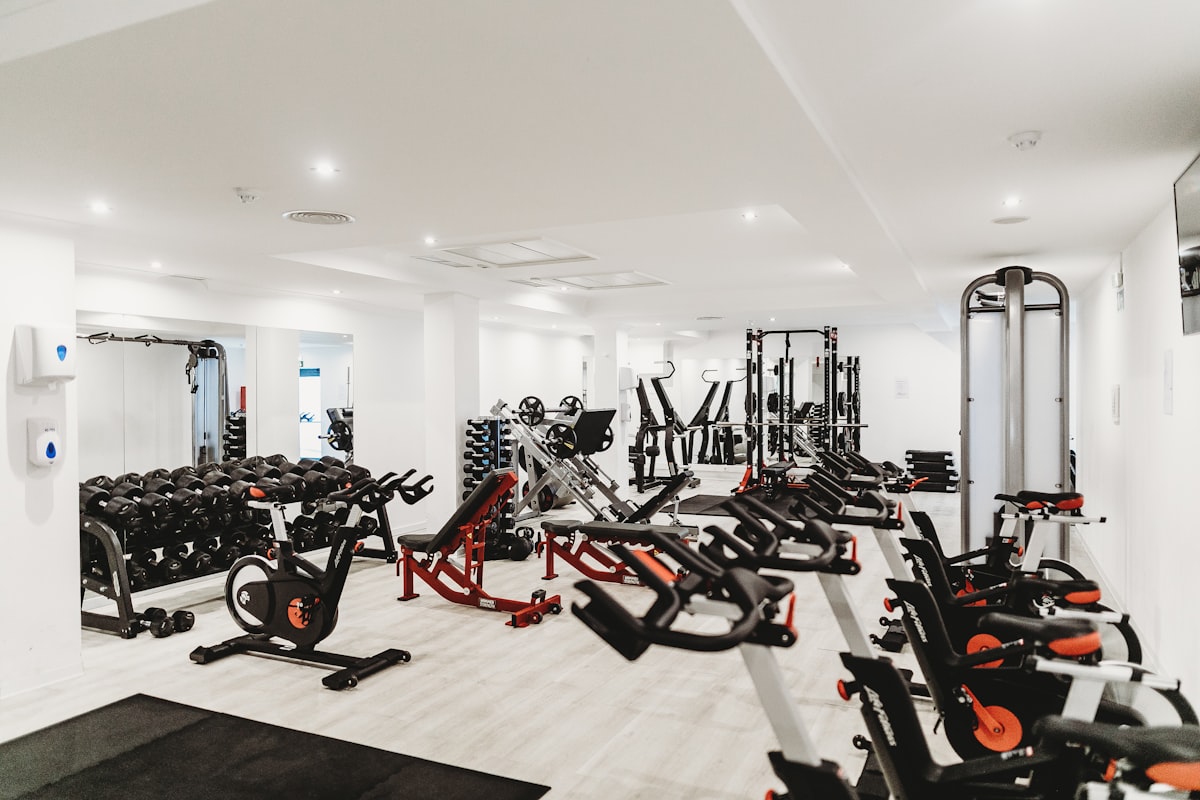
Glance at the heart rate chart on any gym treadmill or elliptical and you'll see it — a colour-coded diagram showing a "fat burning zone" at 60–70% of your maximum heart rate. It's presented as a fitness truth, something you should aim for if you want to shed fat. But is the fat burning zone a genuine physiological phenomenon, a useful training concept, or a piece of marketing that has outlived its usefulness? The honest answer is: all three, depending on context.
What the Fat Burning Zone Actually Is
The "fat burning zone" is based on real exercise physiology. At low-to-moderate exercise intensities — roughly 60–70% of your maximum heart rate — your body preferentially uses fat as its primary fuel source, a physiological fact confirmed by CDC physical activity research. The substrate utilisation breakdown at this intensity is approximately 60–70% fat, 30–40% carbohydrates. At higher intensities, the proportion shifts: carbohydrates become the dominant fuel because they can be oxidised faster to meet the increased energy demand.
So the basic premise is true: you do burn a higher percentage of calories from fat at lower intensities. This is not marketing — it's established exercise metabolism. The problem is what this fact gets twisted into meaning.
Why It Sounds Good on Paper (And Where It Goes Wrong)
The logic seems airtight: if you want to burn fat, train at the intensity that maximises fat as a fuel source. Stay in the fat burning zone, lose more fat. Simple.
The flaw is the focus on percentage rather than total. A 30-minute moderate-intensity walk might burn 200 calories, with 65% from fat — roughly 130 fat-derived calories. A 30-minute HIIT session might burn 400 calories, with 40% from fat — roughly 160 fat-derived calories. The HIIT session burns more total fat despite using a lower percentage from fat. Percentages are meaningless without the total.
Think of it this way: 10% of £1,000 is more money than 100% of £50. The percentage means nothing without the base number.
"Fuel substrate percentages are interesting from a physiological standpoint, but they're largely irrelevant to body composition outcomes. What matters for fat loss is total energy expenditure — and what happens over the subsequent 24–48 hours, not just during the session itself." — Dr. Martin Gibala, McMaster University
The Problem: Total Calorie Burn Matters More Than Fuel Source
Here's the metabolic reality that the "fat burning zone" concept ignores: your body's fuel usage during exercise does not determine how much fat you lose over days and weeks. What determines fat loss is total caloric deficit — the difference between what you consume and what you expend over time, per NHLBI physical activity guidance.
After a session, your body rebalances fuel usage. Fat burned during exercise can be replenished from dietary fat; carbohydrates depleted during HIIT are restored from glycogen. The net effect on body composition is determined by total energy expenditure over 24+ hours — not the mix of fuels used during one session. This is why focusing on the "zone" misses the bigger picture entirely.
HIIT Burns More Total Fat Over 24 Hours
HIIT has a significant advantage in the 24-hour fat loss race, and it comes down to EPOC — Excess Post-exercise Oxygen Consumption. After a HIIT session, your body continues burning elevated calories for up to 12–48 hours as it:
- Restores depleted oxygen stores in blood and muscle tissue
- Removes metabolic waste products (lactic acid, CO2)
- Repairs micro-damaged muscle fibres
- Replenishes depleted glycogen stores
- Returns heart rate, body temperature, and hormones to baseline
This EPOC effect can add 100–200 extra calories burned in the hours following a HIIT session. A meta-analysis in the British Journal of Sports Medicine confirmed that HIIT produces comparable or greater fat loss than longer-duration moderate-intensity exercise — in significantly less time. A moderate-paced 60-minute jog produces essentially no EPOC. A 25-minute HIIT session produces meaningful afterburn.
Excess Post-exercise Oxygen Consumption (EPOC) — also called the "afterburn effect" — is the elevated calorie burning that continues after intense exercise ends. Think of it like a car engine that stays hot after a long drive: it takes time and energy to cool down and reset. A brief but intense HIIT session can keep your metabolic rate elevated for 12–48 hours afterward. A gentle 60-minute walk has virtually no EPOC — the "engine" barely warmed up. This is why short, intense sessions can outperform longer, easier ones for total fat loss.
The Right Way to Use Zone 2 Training
This doesn't make moderate-intensity "Zone 2" training useless — far from it. Zone 2 (60–70% max HR) has profound and well-documented benefits that HIIT simply cannot replicate:
- Mitochondrial biogenesis: Sustained low-intensity effort stimulates the creation of new mitochondria — the energy factories within muscle cells — improving fat oxidation capacity over time.
- Aerobic base development: Zone 2 training builds the aerobic foundation that supports higher-intensity performance. Without a solid Zone 2 base, your ability to train hard is limited.
- Recovery-compatible: Zone 2 sessions don't significantly stress the central nervous system, making them safe on rest days and between intense sessions.
- Cardiovascular health: Long-duration Zone 2 work has the strongest evidence base for cardiovascular risk reduction — independent of any fat loss effects.
Zone 2 is genuinely valuable. It's just not the optimal approach for maximising calorie burn or breaking through fat loss plateaus.
Who Should Use Zone 2 vs HIIT
Beginners: Start With Zone 2
For anyone new to exercise or returning after a long break, HIIT's intensity is both unnecessary and potentially counterproductive. The recovery demands are significant, and the risk of injury is higher without a base level of fitness. Starting with three to four Zone 2 sessions per week builds the aerobic foundation safely. Move to HIIT after six to eight weeks of consistent training.
Trained Individuals: HIIT for Fat Loss Efficiency
For people with a solid training base, incorporating two HIIT sessions per week alongside two to three Zone 2 sessions provides the best of both worlds: EPOC-driven fat loss, continued aerobic development, and manageable recovery stress.
The Hybrid Approach: Why Both Have a Place
The most effective cardio strategy for body composition isn't a binary choice between Zone 2 and HIIT — it's a structured combination of both. A practical weekly template for someone training for fat loss:
- 2 × HIIT sessions (20–25 minutes, sprint intervals or bike sprints)
- 2 × Zone 2 sessions (40–60 minutes, brisk walking, cycling, or rowing at a conversational pace)
- 3–4 × strength training sessions (the most important component for long-term metabolic health)
This structure delivers EPOC-driven fat loss from HIIT, aerobic capacity from Zone 2, and the muscle-building metabolic boost from strength training — all while remaining recoverable.
The Bottom Line
The fat burning zone is real in a technical sense — lower intensity exercise does use a higher proportion of fat as fuel. But focusing exclusively on that zone is one of fitness's most widespread misconceptions. What matters for fat loss is total caloric expenditure over 24 hours — and by that measure, HIIT is significantly more efficient than staying "in the zone." Zone 2 training has its own irreplaceable benefits for aerobic base, cardiovascular health, and mitochondrial development, supported by WHO physical activity guidelines. Use both intelligently, prioritise resistance training as your foundation, and don't let the heart rate chart on a treadmill dictate your entire programme. For a deeper look at the evidence, read our comparison of HIIT vs steady-state cardio, and see proven strategies to speed up your metabolism. Consult a qualified exercise professional if you want a plan tailored to your specific fitness level and goals.